Stewardship · The Cotswolds
The hidden art of the Cotswold fixer-upper
How to buy and restore a tired Cotswold house without ruining the stone: listing, lime, thatch, sequencing, costs, and when a wreck is really a wreck.
Janette Purkiss · 26 September 2025
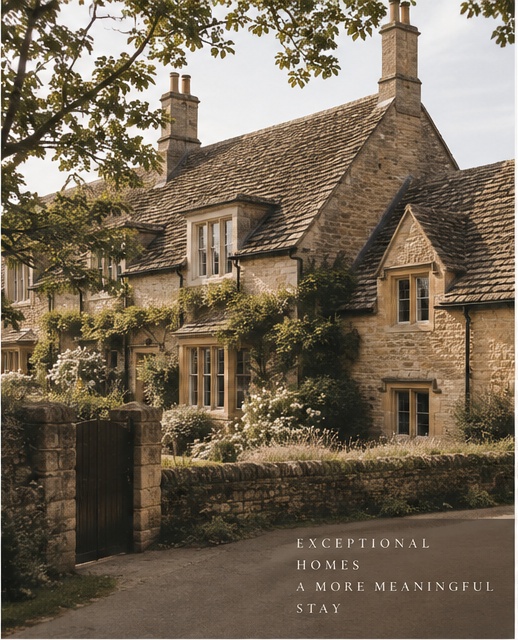
There is a particular English dream that is not the finished cottage with the perfect rose. It is the tired one: a sag in the ridge, a kitchen from 1987, a garden gone to nettle, a price that looks like an invitation. Overseas buyers, especially, see a film set that needs love. Local buyers see a listed building that needs lime, a thatcher, and two winters. Both can be right. The hidden art is the sequence.
What 'fixer-upper' means in this stone
A Cotswold house is not a timber frame you can open like a kit. It is a pile of limestone that has been settling since someone with a horse last thought it was finished. Movement is often historic, not acute. Damp is often cement, not a spring. The wreck that is worth it has a good roof line, a plan that still makes a home, access for materials, and neighbours who will survive a year of vans. The wreck that is not has a failed structure, no consent for the bits you liked, or a lane a lorry cannot enter.
Listing is the plot, not the subplot
If it is listed, every instinct to 'just' replace windows, lower a floor, open a fireplace, or throw a rear orangery must pass through listed building consent. Do this before you buy if the dream depends on it, or price the house as it stands. Unconsented work by a previous romantic is now your problem. A heritage statement is not decoration. It is how you keep the house and the local authority in the same room.
Lime, breath, and the men who still know
The art is old and local: lime pointing, breathable plasters, the right mortar for this bed of stone, joiners who can copy a sash, electricians who will lift boards without spite. You cannot Amazon this. Janette's management practice exists partly because these names are a bench, not a Google result at midnight. A fixer-upper without that bench is a film without a crew.
Cost, time, and living in the dust
Add contingency until it hurts, then add a winter. Thatch, stone slate, drainage, heating (oil to heat pump is not a weekend), bats, newts, and the discovery behind a plastic ceiling: these are normal. Living on site can save a second rent and destroy a marriage. Renting nearby, perhaps in a short stay we already run to a proper standard, is sometimes the cheaper romance.
When to walk away
Walk away if the only access is a footpath, if the listing officer has already said no to the thing you need, if the flood map and the mill race agree, if the numbers only work with a hidden flat in the barn that planning will not wear. Stay if the house, stripped of Instagram, is still a house you would sit in with a kettle on a Sunday after the market at Moreton. That test has not failed us yet.
Acquisition here includes the projects, not only the polished. If you want the tired one, say so early. We will tell you whether it is a film or a hole. Both have their buyers. Only one should have you.
- Is a Cotswold fixer-upper a good investment?
- It can be, if the bones, the listing, and the access are right, and if you cost lime, specialists, and time honestly. It is a poor investment if you hoped for a London loft conversion on a Grade II cottage.
- Can I put a modern extension on a listed Cotswold house?
- Sometimes, with listed building consent and a design that defers to the old work. Often not as social media suggests. Start with the conservation officer, not the glass company.